
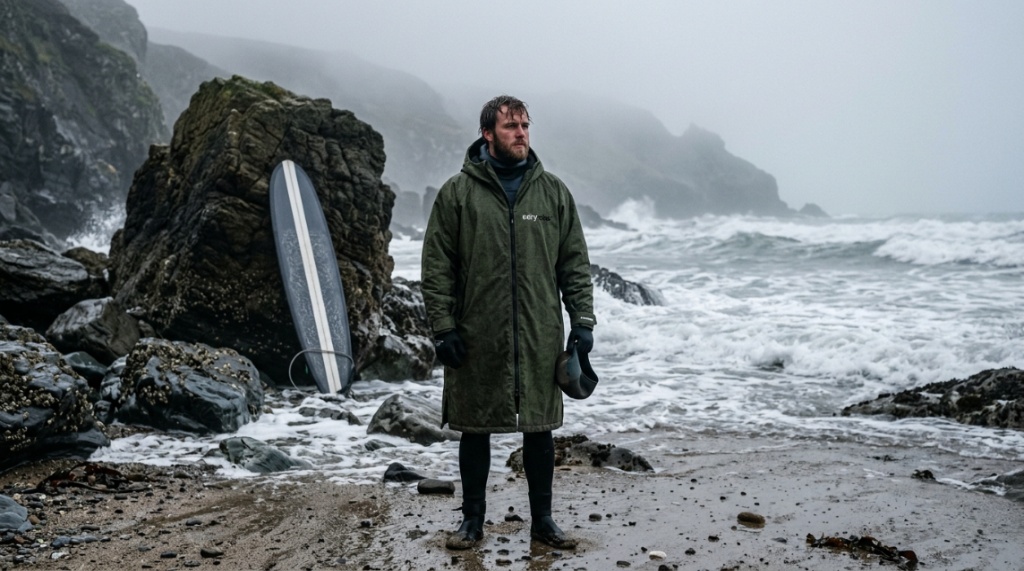
You just finished the best session of your life. The waves were firing, the wind was howling, and now you’re standing in the parking lot, shivering, struggling to peel off a freezing wetsuit while the ocean breeze cuts through you like a knife. Sound familiar? If you surf cold water, you know this pain intimately. The solution isn’t just any changing robe; it’s a windproof surf poncho cold-water design that blocks the elements while you change. Most surfers grab the cheapest fleece-lined poncho, only to find it acts like a sail in the wind. This guide will walk you through exactly what to look for, which features matter most for winter surfing, and how to avoid wasting money on gear that fails when you need it most.
What Makes a Surf Poncho Truly Windproof for Cold Water?
The Difference Between Water-Resistant and Windproof Fabrics
A windproof surf poncho is not the same as a water-resistant one. Water-resistant fabrics repel light rain but often let cold air pass straight through. True windproof construction uses tightly woven nylon or polyester blends with a specialized coating or membrane that stops air penetration. Look for fabrics rated with a wind resistance standard or those marketed specifically as “windproof” rather than just “weather-resistant.” Many cheap ponchos fail here because they rely on fleece alone, which offers zero wind protection even when thick.
How Windproofing Affects Body Temperature Retention
When you’re standing in 45-degree air after a 52-degree surf session, your body loses heat rapidly through convection. A windproof outer layer traps the warm microclimate created by your body and wetsuit, preventing that heat from being stolen by gusts. Without this barrier, you’ll stay cold even inside a heavy poncho. The best designs combine a windproof shell with a thermal lining, creating a dual-layer system that keeps you warm during the vulnerable changing process.
Common Misconceptions About “Windproof” Claims
Not all “windproof” ponchos are created equal. Some brands use the term loosely to describe thick fleece, which blocks some wind but not all. Others use a cheap PU coating that cracks after a season. True windproof surf ponchos use either a bonded membrane like those found in outerwear shells or a densely woven fabric with a DWR (Durable Water Repellent) finish. Always check the fabric composition and read reviews from cold-water surfers specifically, not just beachgoers.
Which Features Matter Most in a Cold Water Surf Poncho?
Fabric Weight and Thermal Lining Materials
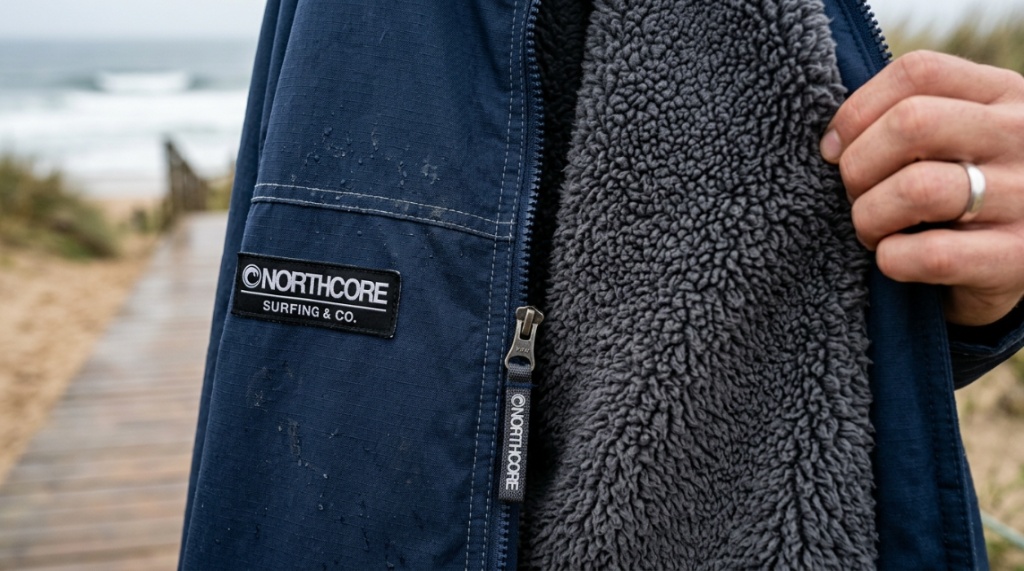
For cold-water surfing, you want a poncho with a minimum fabric weight of 200 GSM (grams per square meter) for the shell, combined with a fleece or sherpa lining between 240 and 300 GSM. The combination should feel substantial without being heavy enough to weigh you down when wet. Avoid ponchos with thin cotton linings—they absorb water and stay cold. Instead, look for polyester fleece, microfleece, or thermal brushed tricot linings that dry quickly and insulate even when damp.
Zipper Quality and Changing Access Design
The zipper is the most common failure point in any poncho. For cold water use, you need a YKK or equivalent brand zipper, preferably with a waterproof coating and large pull tab you can grip with cold, numb fingers. Look for ponchos with a double-sided zipper that allows you to open from the top or bottom, making it easier to wriggle out of a wetsuit without fully exposing yourself. Magnetic closures are becoming popular but often fail in sandy, wet conditions—stick with zippers for reliability.
Hood Design for Wind and Spray Protection
A hood is non-negotiable for cold-water surf ponchos. The best hoods are adjustable with a drawstring or elastic cord, have a stiff brim to keep rain and spray off your face, and sit high enough to allow peripheral vision while you’re changing. Fixed hoods without adjustments tend to blow off in strong winds, defeating the purpose entirely. Some premium ponchos also include a stowaway hood that folds into the collar when not needed.
How Do I Choose the Right Size and Length for Wind Protection?
Length Considerations for Seated vs Standing Changes
Most cold-water surfers change while standing to avoid getting sand in their gear, but some prefer kneeling or sitting on a tailgate. For standing changes, you need a poncho that reaches at least mid-thigh or knee level. Longer isn’t always better—excess fabric at the bottom can catch wind and act like a parachute. A length of 42–48 inches is ideal for most adults. If you’re over 6 feet tall, look for tall-specific sizes or those labeled “long” to ensure adequate coverage without exposing your lower back.
How to Measure Yourself for a Poncho Fit
Measure your chest circumference, shoulder width, and height from the back of your neck to your knees. Compare these measurements to the brand’s sizing chart—don’t rely on S/M/L/XL alone because poncho sizing varies wildly between manufacturers. You want enough room to change freely without the poncho feeling baggy. A good rule is 10–15 inches of extra chest circumference over your actual chest measurement for mobility while still maintaining wind protection.
The Impact of Oversized Ponchos on Wind Resistance
Going too large destroys windproofing. When a poncho is oversized, air gaps form around your neck, arms, and waist, allowing cold air to rush in. The poncho also flaps more in the wind, creating noise and reducing your comfort. Stick to a size that provides 2–4 inches of clearance around your body when wearing a wetsuit. This snug-but-not-tight fit maximizes the effectiveness of the windproof material and keeps warmth locked inside.
What Is the Best Material Composition for Durability and Warmth?
Nylon vs Polyester Outer Shells
Both nylon and polyester work well for windproof surf ponchos, but they differ in key ways. Nylon is stronger and more abrasion-resistant, ideal for surfers who drag their ponchos over rocks or sand. Polyester dries faster and resists UV degradation better, making it better for year-round use. Some premium ponchos use a blend of both for balanced performance. Avoid 100% cotton or canvas shells entirely—they absorb water, freeze in cold conditions, and offer almost no wind resistance when wet.
Synthetic Insulation vs Fleece Linings
Fleece linings are the most common and generally the best choice for cold-water surf ponchos because they offer an excellent warmth-to-weight ratio and dry quickly. However, synthetic insulation like PrimaLoft or Thinsulate provides superior wind blocking when combined with a thin shell. For extreme cold water conditions (water temps below 48°F), consider a poncho with both a fleece lining and an insulated shell layer. The trade-off is weight—insulated ponchos are bulkier and harder to pack for travel. When surfing in freezing climates, standard towel ponchos won’t block the chill—you need specialized weatherproofing. If you’re comparing general styles first, read our complete guide on Find the Best Surf Poncho before deciding on a windproof shell.
Taped Seams and Reinforcement for Longevity
Taped or welded seams prevent wind from sneaking through stitch holes. This is a feature usually found in higher-priced ponchos but worth the investment if you surf year-round. Check for reinforced stress points like the zipper base, shoulder seams, and hem edges. Double-stitched or bartacked seams last multiple seasons, while single-stitched seams often fail after a few uses, especially when wet.
Which brands offer the best value for cold water surfers?
Comparing Budget-Friendly vs Premium Options
Budget-friendly windproof surf ponchos typically cost between $50 and $80 and use basic materials with moderate wind resistance. They work well for occasional cold water sessions but may need replacement every season. Premium options from $100–$200 use advanced fabrics, superior zippers, and better construction that can last 3–5 years of regular use. The best value depends on your frequency of use—weekly surfers benefit from investing in premium, while monthly surfers can go budget without much loss.
Brands Known for True Windproof Construction
Several brands specialize in windproof surf ponchos for cold water quality: O’Neill, Xcel, and Patagonia offer proven designs with dedicated windproof membranes. Rip Curl and Billabong have solid options but often prioritize style over performance in their cheaper lines. For budget-conscious surfers, brands like Wazoo and Dakine provide good wind resistance without the premium price tag. Always check the product description for terms like “wind-blocking,” “windproof membrane,” or “storm shell” rather than just “fleece poncho.”
What to Look for in User Reviews for Cold Water Use
When reading reviews, filter specifically for comments about wind performance, not just warmth. Look for phrases like “kept me warm in strong winds,” “no flapping,” and “seals out drafts.” Pay attention to reviews from surfers in regions like Northern California, the Pacific Northwest, or the UK, where cold and windy conditions are standard. Avoid trusting reviews that mention only “keeping warm” without addressing wind—fleece alone can keep you warm in calm conditions but fails in gusts.
How Do I Care for a Windproof Surf Poncho to Maintain Performance?
Washing Instructions That Preserve Windproofing
Machine wash your poncho in cold water on a gentle cycle using a mild, non-detergent soap like Nikwax Tech Wash or Grangers. Avoid fabric softeners and bleach, which break down the windproof coating and reduce effectiveness. Wash after every 3–4 uses, especially if you’ve been in saltwater or sand, which can clog the fabric’s pores and reduce breathability while also degrading the DWR finish over time.
Drying and Storage Best Practices
Air dry your poncho away from direct sunlight and heat sources. Never put it in a dryer, as high heat can melt the windproof membrane or damage the fleece lining. Hang it inside out to allow the lining to dry fully, especially if it’s a fleece or sherpa material that holds moisture. For storage, keep it loosely folded or hung in a dry, ventilated area to prevent mold and mildew, which can destroy the fabric’s windproof capabilities within a season.
When to Reapply DWR or Waterproofing Treatments
Test DWR effectiveness by spraying water on the outer shell—if water absorbs rather than beads up, it’s time to reapply. Use a spray-on DWR treatment specifically designed for outdoor gear, applying it evenly and then heat-activating it with a low-heat iron (use a pressing cloth) or a 10-minute tumble in a low-heat dryer if safe for the fabric. Reapply every 2–3 months during heavy usage seasons for optimal wind and water performance.
Can I Use a Surf Poncho for Other Cold-Water Activities?
Kitesurfing, Windsurfing, and Paddleboarding
Absolutely—a quality windproof surf poncho works perfectly for kitesurfing, windsurfing, stand-up paddleboarding, or even cold-water swimming. The same windproof and thermal properties that protect after a surf session apply to any activity where you’re wet and exposed to wind. Kitesurfers especially benefit because changing on a windy beach is extremely challenging without a poncho that stays put in gusts. The key is ensuring the poncho has secure closures around the neck and wrists to prevent wind entering from the sides.
Camping, Beach Days, and Travel Versatility
A windproof surf poncho doubles as a camp blanket, a beach windbreaker, or a travel cover-up. Its versatility makes it a smart investment even if you surf infrequently. For cold beach days, wear it over a sweater to block coastal breezes. For travel, it compresses easily and serves as a lightweight jacket alternative. This multi-purpose value justifies spending more for higher-quality construction compared to a single-use poncho.
Frequently Asked Questions
Can I use a regular rain poncho for cold water surfing?
Regular rain ponchos are not windproof and lack thermal lining. They will not keep you warm after a cold water session because they allow wind to penetrate through the thin fabric and do not trap body heat. A dedicated surf poncho with windproof construction and insulation is necessary for comfort.
How often should I replace my windproof surf poncho?
With proper care, a quality windproof surf poncho lasts 2–5 years depending on use frequency and exposure to saltwater, sand, and UV light. Signs of replacement include visible fabric wear, delamination of the windproof membrane, broken zippers, or significantly reduced wind performance even after reapplying DWR treatments.
Are waterproof surf ponchos better than windproof ones?
Waterproof and windproof are different properties. For cold-water surfing, windproof is more important than waterproof because the main heat loss comes from wind exposure, not rain. However, many windproof ponchos also offer water resistance. Prioritize windproof construction first, then check for water resistance as a secondary feature.
What is the best color for a surf poncho in cold water?
Dark colors like black, navy, or charcoal absorb more heat from the sun, helping you warm up slightly faster on cold sunny days. Light colors reflect heat but make it easier to spot your poncho in a crowded parking lot. Choose based on your preference for warmth versus visibility, as color has no impact on windproof performance.
Can I wear a windproof poncho over a dry wetsuit?
Yes, wearing a windproof poncho over a dry wetsuit helps retain body heat before you paddle out and between sessions. It’s especially useful on cold mornings when you want to stay warm before entering the water. Just ensure the poncho is large enough to fit comfortably over your wetsuit without restricting movement.
Do I need a poncho with a built-in changing towel?
Built-in changing towels are a convenience feature but not essential for wind protection. They add weight and bulk but can help you dry off quickly before dressing. If you prioritize windproofing above all, choose a poncho with a fleece or thermal lining rather than a towel surface, as towels absorb moisture and can make you colder in windy conditions.
How do I repair a small tear in my windproof poncho?
Use a patch kit designed for outdoor gear, such as Tenacious Tape or a silicone-based repair patch. Clean the area around the tear, apply the patch on both sides if possible, and press firmly. For nylon shells, you can also use a heat-activated repair tape. Avoid using regular fabric glue, which can weaken the surrounding material and windproof coating.
Choosing the right windproof surf poncho for cold water surfing comes down to understanding the material, fit, and features that truly stop wind, not just claim to. Prioritize a windproof outer shell, quality zippers, an adjustable hood, and a thermal lining that matches your climate. Measure yourself carefully, read reviews through the lens of wind performance, and care for your poncho to ensure it lasts multiple seasons. Whether you’re a weekend warrior or a dedicated cold-water soul, the right poncho transforms your post-surf experience from a freezing battle into a comfortable, warm ritual. Invest in quality now, and every session will end with warmth instead of shivers.
About Author

You may also like
-
Bay Area Science Festival 2026: Best STEM Events and Family Activities
-
State Fair of Virginia 2026: Tickets, Rides and Attractions
-
Arizona State Fair 2026: Dates, Tickets, Concerts and Everything to Know
-
How to Find Safe Arborist Rope Kits Under Budget
-
Iowa State Fair 2026: Dates, Concert Schedule, Ticket Guide and Fair Highlights