
Fishing is one of the most relaxing hobbies you can enjoy. However, the gear that comes with it can quickly take over your home. Rods lean against every wall. Tackle boxes pile up on shelves. Hooks, lures, and line spools seem to multiply overnight. Before long, finding what you need before a trip becomes a stressful chore.
The solution is a well-planned organization system. With the right approach, you can store all your fishing gear neatly, access it easily, and even free up space in your home. This guide covers practical strategies for every type of angler, from the weekend hobbyist to the serious fisherman with a large collection of gear.
Start by Taking Stock of What You Own
Before you move a single item, take everything out and lay it all on the floor. This step is essential. You cannot organize what you cannot see. Many anglers discover duplicate items, broken gear, and things they forgot they owned during this process.
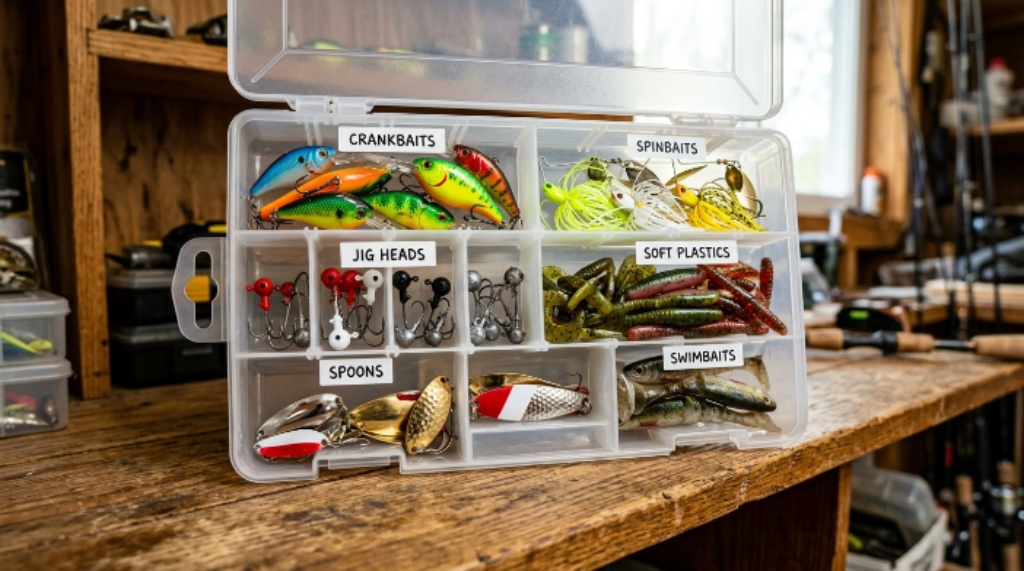
Sort your gear into broad categories first. Group rods together, then reels, then tackle, then clothing and accessories. Once you have broad groups, break each one into smaller subgroups. For example, separate your lures by type: soft plastics, hard baits, spinners, and jigs.
Additionally, this is a great time to declutter. Discard tangled line, rusted hooks, and broken lures. Donate gear you no longer use. A leaner collection is always easier to organize and maintain.
Choose the Right Storage Space
Your choice of storage location will shape the entire organization system. Most anglers have a few options: a garage, a shed, a basement, or a dedicated room. Each space comes with its own advantages and challenges.
A garage setup is the most popular choice for serious anglers. Garages offer plenty of wall space, height, and room for larger storage units. They are also easy to access when you are loading up for a trip. However, garages can be hot in summer and cold in winter, so consider how temperature might affect sensitive gear like adhesives or soft plastics.
A basement is another solid option. It tends to stay cooler and more climate-controlled. However, moisture can be a problem. Make sure your storage area is dry and well-ventilated before storing gear long-term.
If you have limited space, a closet or dedicated corner of a room works well too. The key is consistency. Pick one place and commit to it.
Smart Storage Hacks for Rods and Reels
Fishing rods are long, fragile, and awkward to store. Leaving them propped against a wall is a recipe for accidents and damage. Fortunately, there are several smart storage hacks that keep your rods safe and accessible.
Wall-Mounted Rod Holders
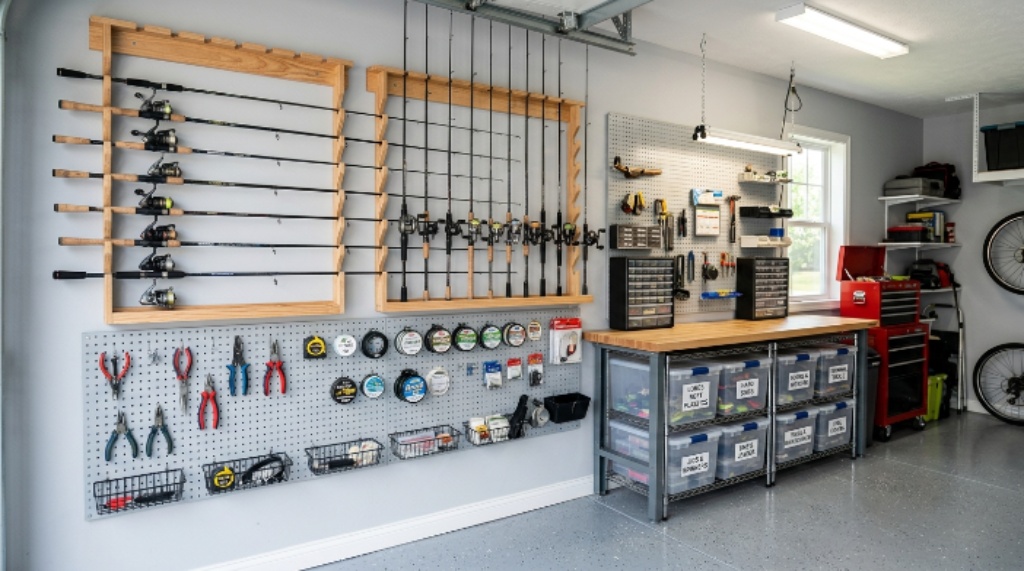
Wall-mounted rod racks are one of the best investments you can make. They keep rods off the floor and out of the way. You can buy ready-made racks at most fishing supply stores, or build a simple one using PVC pipe and basic hardware. Mount them horizontally along a wall to hold multiple rods in a row.
For vertical storage, ceiling-mounted racks work extremely well in garages. They use overhead space that would otherwise go to waste. The rods hang slightly and stay completely out of the way.
Reel Storage Tips
Store reels separately from rods when possible. This reduces stress on the rod guides and line. A simple shelf with labeled bins works perfectly. Additionally, keep reels clean and lightly oiled before storing them. This prevents corrosion and keeps them performing well season after season.
Organizing Your Tackle for Quick Access
Tackle organization is where most anglers struggle the most. There are so many small items to manage. However, with the right system, you can find exactly what you need in seconds.
Use a Modular Tackle System
A modular tackle system uses stackable trays that fit inside a larger carry case. Each tray holds a specific category of lures or accessories. This system is highly flexible. You can pull out just the trays you need for a specific trip rather than lugging your entire collection.
Label each tray clearly on the outside. This saves time when you are searching for something specific. Therefore, even if someone else handles your gear, they can return items to the right place.
Use Magnetic Strips for Small Metal Items
Magnetic strips mounted on a wall or inside a cabinet door are perfect for storing hooks, jig heads, and small metal lures. They keep everything visible and accessible. This is one of those storage hacks that sounds simple but makes an enormous difference in your daily routine.
Repurpose Household Containers
You do not need to spend a lot of money on specialized tackle containers. Many household items work just as well. Ice cube trays store small lures beautifully. Pill organizers hold tiny hooks and split rings. Craft supply boxes with adjustable dividers are excellent for organizing soft plastics by color and size.
Additionally, small zip-lock bags are handy for grouping loose items. Label each bag and store them inside a larger bin. This keeps everything tidy without spending much at all.
Building an Efficient Garage Setup
If you have access to a garage, you have a real opportunity to create a dedicated fishing station. A well-designed garage setup can hold everything from rods and reels to waders, nets, and tackle without taking up much floor space.
Start with wall-mounted shelving. Adjustable metal shelving units are sturdy, affordable, and easy to reconfigure as your needs change. Place heavier items like tackle bags and toolboxes on lower shelves. Store lighter items like floats and soft plastics on higher shelves.
Use pegboards on open wall areas. Pegboards are incredibly versatile. You can hang hooks, bins, rod holders, and tool holders from them. They also let you rearrange your layout at any time without putting new holes in the wall.
Consider adding a small workbench or fold-down table to your space. This gives you a dedicated area for rigging up, tying knots, and maintaining gear. Therefore, you will never have to spread everything across the kitchen table again.
Storing Clothing, Waders, and Accessories
Fishing involves more than just rods and tackle. Clothing, waders, hats, gloves, and vests also need a home. However, these items are often overlooked in organization plans.
Hang waders upside down after each use. This helps them dry completely and prevents mildew. Use a dedicated hook or hanger on a wall in your garage or utility area. Stuff the boot portion with newspaper if you want them to keep their shape during off-season storage.
Store fishing vests on sturdy hangers rather than folding them. This keeps all the pockets accessible and prevents creasing. Additionally, do a quick check of each pocket before hanging. This way you will never arrive at the water without an essential item.
Use clear, labeled bins for hats, gloves, and buffs. Stackable bins with lids keep dust out and make items easy to find. Group accessories by season or fishing type for even faster access.
Maintaining Your System Over Time
Even the best organization system falls apart without regular maintenance. Set aside a few minutes after every fishing trip to return items to their proper place. This habit makes a huge difference over the long run.
Do a full reset at the start and end of each fishing season. Check for damaged gear, restock consumables like line and hooks, and reorganize any areas that have gotten messy. Think of it as a seasonal tune-up for your storage space.
Additionally, involve your family in the system. Label everything clearly so that others can help maintain order. When everyone knows where things belong, the system takes care of itself.
Conclusion
Organizing your fishing equipment does not have to be complicated or expensive. The most important step is to start with a clear plan. Take stock of what you own, choose the right storage space, and build a system that matches your collection and your lifestyle.
Use wall-mounted racks to protect your rods. Invest in a modular tackle system for quick access to lures and accessories. Take advantage of a garage setup if you have one, and use smart storage hacks like magnetic strips and repurposed containers to maximize every inch of available space.
Finally, maintain your system regularly. A few minutes of upkeep after each trip will keep everything running smoothly. With the right setup in place, you will spend less time searching for gear and more time doing what you love: fishing.
Frequently Asked Questions
1. What is the best way to store fishing rods at home?
Wall-mounted rod racks are the safest and most space-efficient option. You can mount them horizontally along a wall or vertically from the ceiling. Both methods keep rods off the floor and away from foot traffic. Ceiling-mounted racks are especially useful in garages where floor and wall space is already in use.
2. How do I keep my tackle organized without spending a lot of money?
Repurpose items you already own. Ice cube trays, pill organizers, and craft supply boxes with dividers all work wonderfully for small tackle items. Additionally, zip-lock bags labeled with a marker are a free and effective way to sort hooks, weights, and small lures by size or type.
3. Is a garage the best place to store fishing gear?
A garage is an excellent choice for most anglers because it offers space, easy access, and room for shelving and rod racks. However, it is important to monitor temperature and humidity. Extreme heat or moisture can damage reels, adhesives, and soft plastics over time. A shed or a climate-controlled basement can also work very well.
4. How should I store fishing waders when not in use?
Always hang waders upside down after rinsing them. This allows air to circulate inside the legs and prevents mildew from forming. Store them in a cool, dry area out of direct sunlight. For long-term off-season storage, fold them loosely and keep them in a breathable bag rather than a sealed plastic bin.
5. How often should I reorganize my fishing gear?
Do a quick tidy-up after every fishing trip to return items to their correct place. Then do a thorough reorganization at the start and end of each fishing season. This twice-yearly reset allows you to declutter expired or damaged items, restock supplies, and adjust your storage system as your gear collection grows or changes.
Related Topics:
Ingenuity Soothe ‘n Delight Baby Swing Review: Is It Worth It for Modern Parents?
Best Hotel Pillows for a 5-Star Sleeping Experience
About Author

You may also like
-
National Dog Show 2026: Dates, Tickets, Schedule, Breeds, and Events
-
Bay Area Science Festival 2026: Best STEM Events and Family Activities
-
State Fair of Virginia 2026: Tickets, Rides and Attractions
-
Arizona State Fair 2026: Dates, Tickets, Concerts and Everything to Know
-
How to Find Safe Arborist Rope Kits Under Budget