
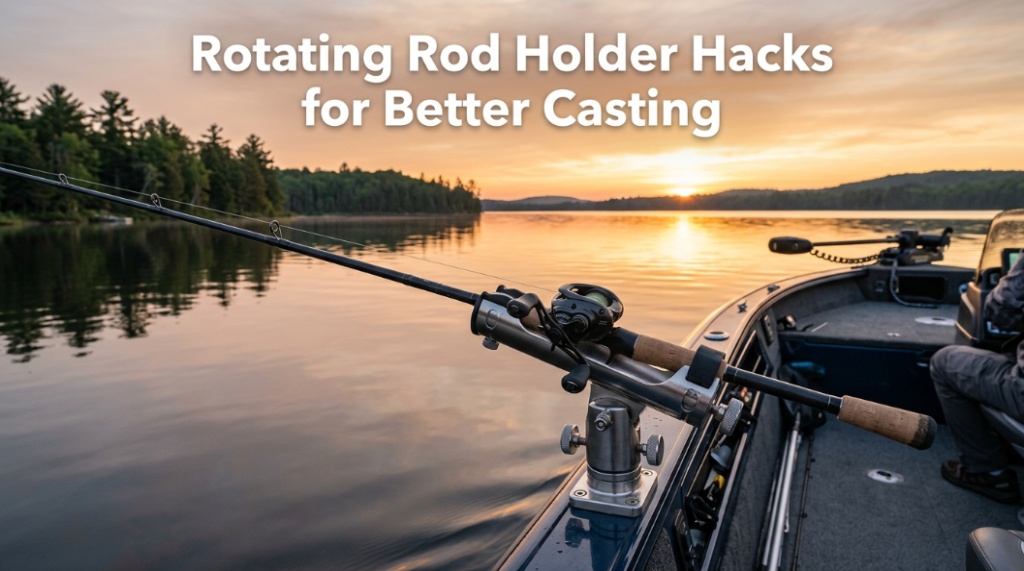
Struggling with tangled lines, awkward casting angles, or unstable fishing setups? A well-positioned rotating rod holder can completely change how you fish. Whether you’re casting from a kayak, boat, dock, or shoreline, the right setup improves rod control, casting distance, hook-setting speed, and comfort. Anglers often underestimate how much rod positioning affects accuracy and fatigue until they switch to flexible rod mounts or an angle adjustable rod holder.
Many fishermen lose opportunities because their rod sits at the wrong angle. Poor positioning causes missed bites, uneven drag pressure, tangled gear, and slower reactions. In rough water or windy conditions, fixed holders become even more frustrating. Rotating systems solve these problems by allowing quick directional adjustments without repositioning the entire mount.
A rotating rod holder is a fishing mount designed to swivel, tilt, or rotate so anglers can optimize rod positioning for casting, trolling, bait presentation, and fish fighting. Modern flexible rod mounts improve ergonomics, reduce strain, and increase casting precision across multiple fishing environments.
This guide covers practical hacks, setup strategies, installation tips, and advanced techniques that help anglers maximize casting efficiency using rotating and angle-adjustable rod holders.
Why Does a Rotating Rod Holder Improve Casting Accuracy?
A rotating rod holder improves casting accuracy by letting anglers position the rod at the optimal angle before casting, reducing awkward movement and improving directional control.
Traditional fixed rod holders lock anglers into one position. That becomes a problem when wind direction changes, fish move to another side of the boat, or water current shifts. With a rotating setup, you can quickly pivot the rod toward your target area without repositioning your entire body.
Professional tournament anglers often adjust rod angles constantly during active fishing sessions. This improves:
- Line management
- Casting distance
- Hook-setting leverage
- Rod protection
- Bait presentation
- Trolling efficiency
Rotating systems are especially useful for:
- Kayak fishing
- Bass boats
- Offshore trolling
- Bank fishing
- Ice fishing shelters
- Pontoon setups
According to recreational fishing equipment studies, ergonomic positioning can significantly reduce upper-body fatigue during long fishing sessions. That matters when anglers spend 6–10 hours continuously casting.
What Are the Best Flexible Rod Mount Hacks for Small Boats?
The best flexible rod mount hacks for small boats involve maximizing deck space, improving access, and creating multi-angle casting positions.
Space is limited on kayaks, jon boats, and compact fishing vessels. Smart anglers use flexible mounting systems to create efficient fishing zones without clutter.
Use Track-Mounted Rotating Systems
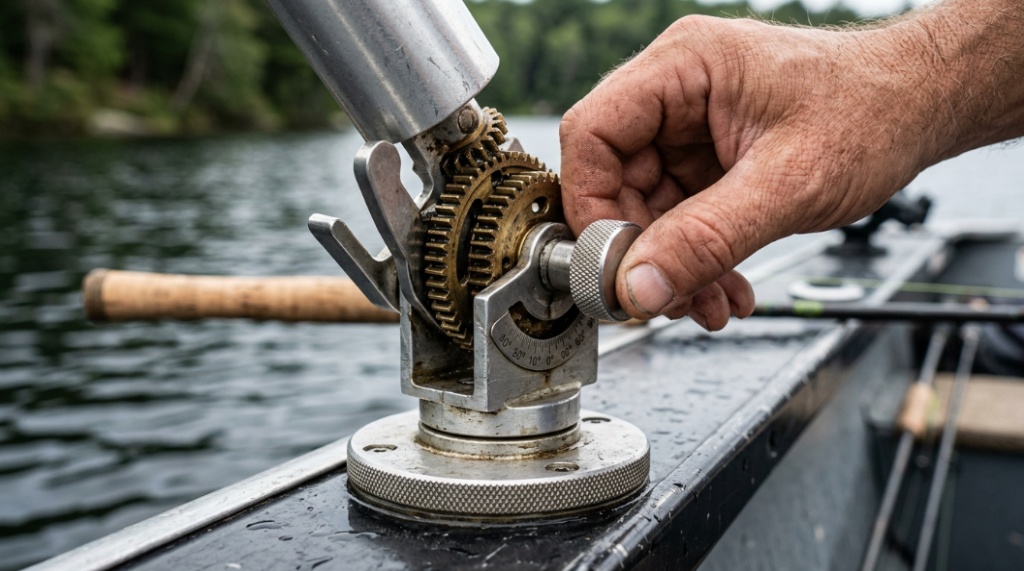
Track systems allow quick repositioning without drilling multiple holes into the boat. These mounts slide and rotate along rails, making them ideal for changing fishing conditions.
Benefits include:
- Fast rod repositioning
- Reduced deck clutter
- Easy accessory swapping
- Better line separation
- Customizable casting angles
Install Dual-Angle Rod Setups
One common hack is setting two rods at different angles:
- 45° for active casting
- 90° for trolling or storage
This setup keeps rods accessible while preventing tangled lines.
Use Elevated Rear Mounts on Kayaks
Kayak anglers often place rotating holders slightly behind shoulder level. This improves paddling clearance while keeping rods within easy reach.
It also creates better casting mechanics because the rod can rotate outward before the cast begins.
How Does an Angle Adjustable Rod Holder Help During Trolling?
An angle adjustable rod holder improves trolling by maintaining ideal lure depth, reducing line crossover, and increasing strike visibility.
Trolling requires precise rod positioning. Even small angle adjustments can change lure behavior underwater. Offshore anglers regularly fine-tune rod angles depending on:
- Boat speed
- Water depth
- Target species
- Wave conditions
- Number of trolling lines
For example:
| Rod Angle | Primary Purpose | Best Use Case |
|---|---|---|
| 30° | Deep trolling | Salmon and walleye |
| 45° | General trolling | Bass and striped bass |
| 60° | Wide line spread | Offshore trolling |
| 90° | Storage or drift fishing | Stationary setups |
Adjustable holders also reduce rod stress during aggressive strikes. Instead of absorbing force at a rigid angle, the rod can flex more naturally.
What Is the Best Rod Holder Position for Longer Casting Distance?
The best rod holder position for longer casting distance is slightly forward-facing at waist-to-chest height with minimal obstruction around the casting path.
Many anglers unintentionally limit casting distance because their holder placement interrupts their natural casting motion.
Optimal Placement Tips
- Keep the rod butt accessible
- Avoid knee-level mounts
- Position holders near dominant hand side
- Angle slightly outward from the body
- Maintain unobstructed swing space
For spinning reels, a slightly elevated outward angle often creates smoother casting flow. Baitcasting setups may benefit from lower side-mounted holders for quicker thumb control.
Why Side Rotation Matters
Rotational flexibility allows anglers to align the rod directly with the casting lane. This reduces wrist compensation and improves accuracy.
It becomes especially important when:
- Fishing around docks
- Casting under trees
- Skipping lures
- Fishing in crowded boats
Can Rotating Rod Holders Reduce Arm and Shoulder Fatigue?
Yes, rotating rod holders reduce arm and shoulder fatigue by improving ergonomics and minimizing repetitive strain during casting and retrieval.
Long fishing sessions place constant stress on:
- Shoulders
- Wrists
- Forearms
- Lower back
Improper rod positioning forces awkward movement patterns. Over time, this reduces endurance and casting consistency.
A rotating holder lets anglers:
- Retrieve from natural angles
- Avoid twisting motions
- Maintain neutral wrist positioning
- Reduce overreaching
Kayak anglers especially benefit because seated casting positions already restrict mobility.
Some modern flexible rod mounts include:
- 360-degree rotation
- Quick-lock systems
- Multi-axis tilt adjustments
- Shock-absorbing bases
These features help distribute load more efficiently during aggressive fish fights.
What Are the Most Common Mistakes When Using Flexible Rod Mounts?
The most common mistakes with flexible rod mounts include improper tightening, poor angle selection, and incorrect placement.
Even premium rod holders fail when installed incorrectly.
1. Over-Tightening Adjustment Knobs
Many anglers apply excessive force to locking mechanisms. This can crack plastic components or damage threading.
2. Ignoring Rod Length Compatibility
Long surf rods require different positioning than short baitcasting rods. A mount optimized for one style may perform poorly with another.
3. Poor Weight Distribution
Mounting heavy rods on lightweight kayak rails can create balance problems.
4. Incorrect Casting Angle
Improper holder angles create inefficient casting paths that reduce distance and accuracy.
5. Low-Quality Hardware
Saltwater corrosion quickly destroys cheap mounting systems. Stainless steel and marine-grade aluminum perform better long-term.
Which Materials Work Best for Angle Adjustable Rod Holders?
Marine-grade aluminum, reinforced nylon, and stainless steel are the best materials for angle adjustable rod holders because they resist corrosion and maintain structural stability.
Different fishing environments require different materials.
| Material | Best For | Main Advantage |
|---|---|---|
| Marine Aluminum | Saltwater boats | Corrosion resistance |
| Reinforced Nylon | Kayaks | Lightweight design |
| Stainless Steel | Heavy trolling | Maximum durability |
| Composite Plastic | Casual fishing | Budget-friendly |
Saltwater anglers should prioritize corrosion resistance above everything else. Freshwater anglers can often use lighter materials without sacrificing durability.
How Can You Customize a Rotating Rod Holder for Different Fishing Styles?
You can customize a rotating rod holder by adjusting angle range, mount height, rotation resistance, and accessory compatibility for specific fishing techniques.
Different fishing styles require different rod behavior.
Bass Fishing Setup
- Fast-access side mounts
- Low-profile rotation
- Quick-release functionality
Offshore Trolling Setup
- Heavy-duty locking system
- Wide-angle spread positioning
- High-strength aluminum construction
Kayak Fishing Setup
- Compact rail mounts
- 360-degree swivel
- Flush-mounted storage mode
Surf Fishing Setup
- Elevated rod positioning
- Sand-resistant joints
- Long-rod support angles
Some advanced anglers even color-code mount positions to quickly identify trolling, casting, and storage angles.
Are Rotating Rod Holders Worth It for Beginners?
Yes, rotating rod holders are worth it for beginners because they simplify rod management, improve comfort, and reduce setup mistakes.
New anglers often struggle with:
- Line tangles
- Rod storage
- Casting posture
- Boat organization
An adjustable system solves many of these issues immediately.
Beginners also learn faster when they can experiment with:
- Different casting angles
- Trolling spreads
- Rod placement positions
- Bait presentation setups
Instead of buying multiple fixed mounts later, many anglers now start with one high-quality adjustable system.
How Do Professional Anglers Use Angle Adjustable Rod Holders?
Professional anglers use angle adjustable rod holders to optimize efficiency, manage multiple rods, and react faster to changing fishing conditions.
Tournament fishing demands rapid adaptation. Conditions shift constantly due to:
- Wind direction
- Water temperature
- Current speed
- Fish movement
- Boat positioning
Professional anglers frequently reposition rods throughout the day to maintain ideal lure presentation.
Common tournament strategies include:
- Forward-facing casting setups
- Wide trolling spreads
- Quick-access backup rods
- Vertical jigging angles
Many offshore captains use rotating holders with integrated locking systems to handle high-drag game fish like tuna and marlin.
What Features Should You Look for in a Flexible Rod Mount?
The best flexible rod mounts include strong locking mechanisms, corrosion resistance, smooth rotation, and compatibility with your fishing platform.
Before buying, evaluate these features carefully.
Key Features Checklist
- 360-degree rotation
- Multi-angle tilt adjustment
- UV-resistant materials
- Marine-grade hardware
- Quick-release design
- Track system compatibility
- Heavy-load capacity
- Anti-slip locking system
Cheap holders often fail at the adjustment joints first. Quality hardware matters more than flashy design.
Serious anglers should also check:
- Weight ratings
- Rod diameter compatibility
- Mounting footprint
- Saltwater certification
Conclusion
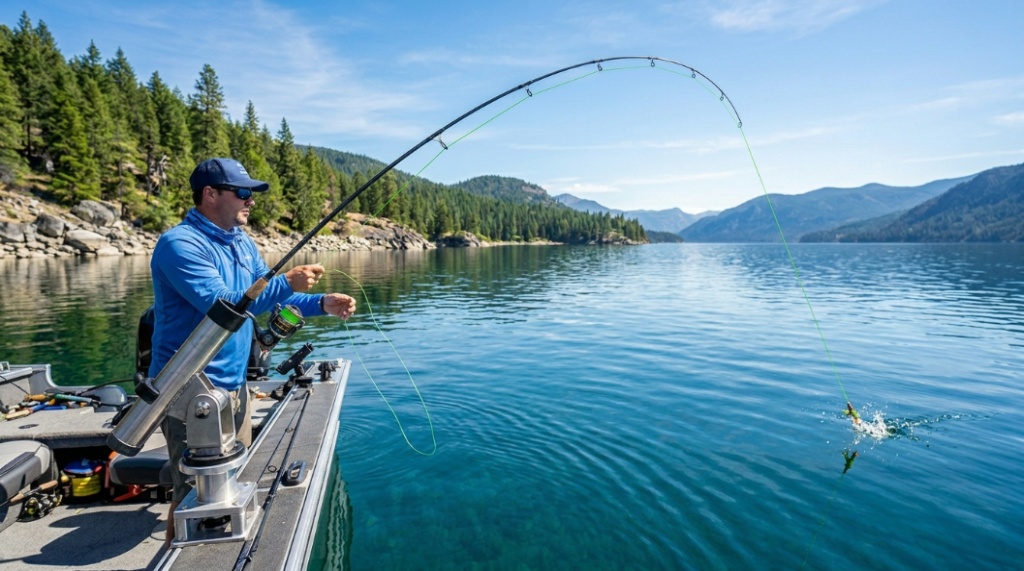
A properly configured rotating rod holder can dramatically improve casting accuracy, comfort, rod management, and fishing efficiency. Whether you fish from a kayak, bass boat, offshore vessel, or shoreline, adjustable positioning helps you adapt quickly to changing conditions.
Modern flexible rod mounts offer more than convenience. They reduce fatigue, improve lure presentation, prevent tangled lines, and create cleaner deck organization. An angle adjustable rod holder also gives anglers better control during trolling, casting, and fighting fish.
The biggest advantage is adaptability. Fishing conditions change constantly, and fixed rod setups cannot respond fast enough. Rotating systems let anglers make precise adjustments in seconds.
If you want longer casts, better ergonomics, and smarter rod positioning, upgrading your rod holder setup is one of the most practical improvements you can make. Evaluate your fishing style, choose durable materials, and optimize your mount placement carefully.
The right setup can make every fishing session smoother, more comfortable, and more productive.
FAQ: Rotating Rod Holder Hacks for Better Casting
What is a rotating rod holder?
A rotating rod holder is an adjustable fishing mount that swivels or tilts to change rod direction and angle for better casting, trolling, and fish fighting.
Are flexible rod mounts good for kayaks?
Yes, flexible rod mounts are excellent for kayaks because they save space, improve casting angles, and allow quick rod repositioning in tight fishing environments.
How do angle adjustable rod holders help with trolling?
Angle adjustable rod holders improve trolling by controlling line spread, lure depth, and rod positioning for better bait presentation and fewer tangles.
What angle is best for casting?
The best casting angle depends on fishing style, but many anglers prefer a slightly outward 30–45° position for smoother casting motion and better accuracy.
Can rotating rod holders handle heavy fish?
High-quality rotating rod holders made from stainless steel or marine-grade aluminum can handle heavy fish, including offshore species like tuna and marlin.
Do rotating rod holders reduce fatigue?
Yes, rotating rod holders improve ergonomics by reducing awkward arm and shoulder movements during long fishing sessions.
Which material is best for saltwater rod holders?
Marine-grade aluminum and stainless steel are the best materials for saltwater rod holders because they resist corrosion and withstand harsh marine environments.
📌 Related Reads
Discover: How to Pick a Non-Slip Surf Bikini for Maximum Performance
Explore: How to Organize Fishing Equipment Efficiently at Home
About Author

You may also like
-
National Dog Show 2026: Dates, Tickets, Schedule, Breeds, and Events
-
Bay Area Science Festival 2026: Best STEM Events and Family Activities
-
State Fair of Virginia 2026: Tickets, Rides and Attractions
-
Arizona State Fair 2026: Dates, Tickets, Concerts and Everything to Know
-
How to Find Safe Arborist Rope Kits Under Budget