
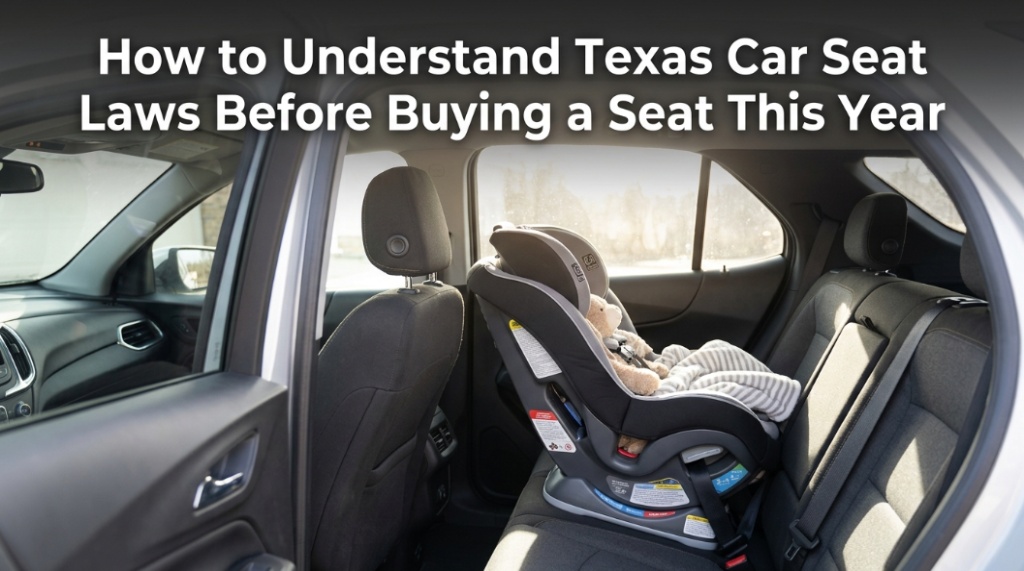
Buying a child car seat without understanding Texas car seat laws is like printing a legal contract on the wrong side of a page—you may not notice the mistake until it creates a costly problem. The most important thing parents should know is that Texas law requires children younger than 8 years old to ride in an appropriate child safety seat unless they are taller than 4 feet 9 inches. Understanding these requirements before purchasing a seat helps parents choose the correct model, avoid fines, and most importantly, protect their child in a crash.
What Are Texas Car Seat Laws and Why Do They Matter?
Direct Answer: Texas car seat laws require children under age 8 to use a child safety seat unless they are taller than 4 feet 9 inches. The law is designed to reduce injuries and fatalities in motor vehicle accidents.
Car crashes remain one of the leading causes of injury among children in the United States. According to safety organizations and traffic studies, properly installed car seats significantly reduce the risk of serious injury for infants and young children.
Texas law focuses on age, height, and proper restraint use. Parents who fail to comply may face fines and court costs. More importantly, choosing the wrong seat can leave a child vulnerable during sudden stops or collisions.
When researching safety equipment, many parents also compare durability, long-term value, and maintenance requirements—similar to how consumers evaluate reliable automotive tools that provide long-term performance before making a purchase.
Key requirements include:
- Children under 8 must use an approved child restraint system.
- Children taller than 4 feet 9 inches may use a regular seat belt.
- The restraint must be installed according to manufacturer’s instructions.
- Drivers are responsible for ensuring compliance.
How Does Texas Define an Appropriate Child Safety Seat?
Direct Answer: An appropriate child safety seat is one that matches the child’s age, weight, height, and developmental stage while meeting federal safety standards.
Many parents mistakenly purchase seats based only on age recommendations. However, manufacturers design child restraint systems according to specific weight and height limits.
Appropriate safety seats generally include:
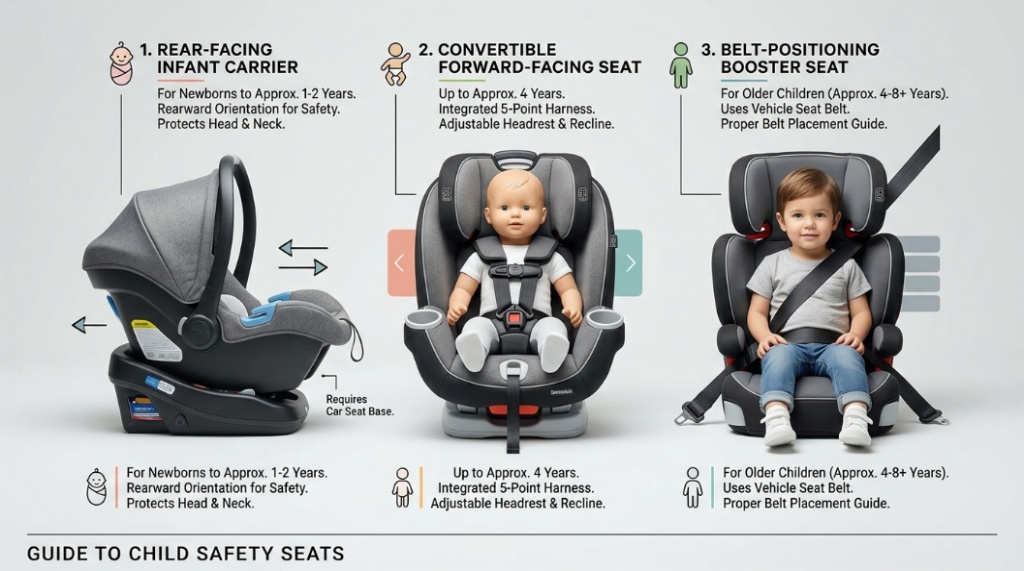
- Rear-facing infant seats
- Convertible car seats
- Forward-facing harness seats
- Booster seats
- All-in-one car seats
Each category serves a different purpose. A seat that is too large or too small may not provide optimal protection during a crash.
Before purchasing, check:
- Federal Motor Vehicle Safety Standards (FMVSS) certification
- Weight limitations
- Height restrictions
- Expiration date
- Vehicle compatibility
- Installation method (LATCH or seat belt)
When Should a Child Use a Rear-Facing Car Seat in Texas?
Direct Answer: Children should remain rear-facing as long as possible until they reach the maximum height or weight limit specified by the seat manufacturer.
Safety experts consistently recommend extended rear-facing use because it provides superior protection for a child’s head, neck, and spine.
During a frontal collision, a rear-facing seat distributes crash forces across the child’s back rather than concentrating them on vulnerable areas.
General rear-facing recommendations include:
| Child Stage | Typical Age | Recommended Position |
|---|---|---|
| Newborn | 0–12 months | Rear-facing |
| Toddler | 1–3 years | Rear-facing as long as limits allow |
| Older Toddler | 2–4 years | Transition only when limits are exceeded |
Parents should prioritize manufacturer limits rather than rushing to switch based solely on age.
When Can a Child Move to a Forward-Facing Seat?
Direct Answer: A child can move to a forward-facing seat after exceeding the rear-facing height or weight limits established by the manufacturer.
Forward-facing seats use an internal harness system to secure the child. These seats distribute crash forces more effectively than a seat belt alone.
Parents should ensure:
- The harness fits snugly.
- Chest clip positioning is correct.
- Seat anchoring follows manufacturer instructions.
- Weight limits have not been exceeded.
Proper installation matters just as much as seat selection. Even a premium car seat can perform poorly if installed incorrectly. Vehicle safety issues and maintenance concerns can also affect overall passenger protection, making it worthwhile to understand common transmission and vehicle performance problems that may impact driving safety.
When Is a Booster Seat Required Under Texas Car Seat Laws?
Direct Answer: Booster seats are generally required once a child outgrows a forward-facing harness seat but is still too small for an adult seat belt to fit correctly.
Booster seats elevate the child so that the vehicle seat belt aligns properly across the strongest parts of the body.
A properly positioned seat belt should:
- Rest across the upper thighs
- Cross the center of the chest
- Stay off the neck and abdomen
- Remain secure during travel
Children often need booster seats until they reach approximately 4 feet 9 inches in height.
Prematurely switching to a regular seat belt can increase injury risk during collisions.
Can a Child Sit in the Front Seat in Texas?
Direct Answer: Texas law does not establish a specific minimum front-seat age, but safety experts strongly recommend children under 13 ride in the back seat.
The rear seat provides additional protection from airbags and frontal impacts.
Front passenger airbags deploy with significant force. While this force helps protect adults, it can seriously injure smaller children.
Best practices include:
- Keeping children under 13 in rear seating positions
- Using age-appropriate restraints
- Following manufacturer instructions
- Ensuring proper seat belt placement
What Features Should Parents Look for When Buying a Car Seat?
Direct Answer: Parents should prioritize safety certifications, correct fit, ease of installation, side-impact protection, and long-term usability.
Modern car seats include a variety of advanced safety technologies. However, the safest seat is the one that fits the child correctly and can be installed properly every time.
Important buying factors include:
Does the Seat Match the Child’s Size?
Always verify height and weight limits before purchasing.
Is Installation Simple?
Complicated installation systems often lead to user errors. Seats with clear indicators and straightforward installation mechanisms can reduce mistakes.
Does It Offer Side-Impact Protection?
Enhanced side-impact protection helps absorb energy during side collisions.
Can It Grow With the Child?
Convertible and all-in-one seats may provide better long-term value by supporting multiple growth stages.
Is the Fabric Easy to Clean?
Machine-washable covers and removable padding simplify maintenance.
What Mistakes Do Parents Commonly Make When Following Texas Car Seat Laws?
Direct Answer: The most common mistakes include transitioning too early, loose harness straps, incorrect installation, and using expired seats.
Many car seat misuse issues occur despite good intentions. Understanding these mistakes can significantly improve child safety.
- Switching from rear-facing too early
- Using a booster seat prematurely
- Incorrect harness positioning
- Loose seat installation
- Ignoring expiration dates
- Buying used seats with unknown histories
- Skipping manufacturer instructions
Parents should periodically inspect installation and adjust settings as children grow.
How Can Parents Verify That a Car Seat Meets Safety Standards?
Direct Answer: Parents should confirm federal certification labels, review manufacturer documentation, and register the product after purchase.
Every compliant seat sold in the United States includes labels showing conformity with federal safety requirements.
Verification checklist:
- FMVSS compliance label present
- Instruction manual included
- Manufacturing date visible
- Registration card available
- No recalls affecting the model
- No visible structural damage
Registering a seat allows manufacturers to notify owners about recalls or safety updates.
How Do Texas Car Seat Laws Compare Across Different Child Ages?
Direct Answer: Texas requirements evolve as children grow, progressing from rear-facing seats to forward-facing seats, booster seats, and eventually adult seat belts.
| Child Stage | Recommended Restraint | Primary Consideration |
|---|---|---|
| Infants | Rear-facing seat | Head and neck support |
| Toddlers | Extended rear-facing | Maximum crash protection |
| Young children | Forward-facing harness | Secure restraint |
| Older children | Booster seat | Proper seat belt positioning |
| Taller children | Vehicle seat belt | Correct belt fit |
Following these progression stages helps ensure compliance with Texas law while maximizing safety.
Where Can Parents Find the Best Car Seat Information Before Buying?
Direct Answer: Parents should consult safety organizations, manufacturer guidance, certified child passenger safety technicians, and detailed buying guides.
Researching before purchase helps avoid expensive mistakes and ensures the selected model aligns with legal requirements and family needs.
For a detailed breakdown of top-rated options, safety features, and buying considerations, parents can review this comprehensive guide to the best baby car seat choices for Texas families before making a final decision.
Conclusion: How Can Parents Choose the Right Car Seat With Confidence?
Understanding Texas Car Seat Laws before shopping is one of the smartest steps a parent can take. Texas requires children younger than 8 years old to use an appropriate child safety seat unless they exceed 4 feet 9 inches in height. Beyond legal compliance, choosing the correct restraint dramatically improves protection during collisions.
The best approach is simple: match the seat to your child’s height and weight, follow manufacturer guidelines, prioritize correct installation, and avoid moving to the next stage too soon. Rear-facing seats, forward-facing harness systems, booster seats, and seat belts each serve a specific purpose in a child’s development.
If you’re preparing to buy a new seat this year, start by reviewing a trusted resource covering the most recommended baby car seats for Texas families. Taking a few extra minutes to research today can provide years of safer travel for your child.
Frequently Asked Questions About Texas Car Seat Laws
What is the minimum age for a child to stop using a car seat in Texas?
Direct Answer: Texas law generally requires children under age 8 to remain in an appropriate child safety seat unless they are taller than 4 feet 9 inches.
Height and proper seat belt fit are equally important considerations. Many children continue using booster seats beyond age 8 for optimal protection.
Can a 7-year-old use only a seat belt in Texas?
Direct Answer: Only if the child is taller than 4 feet 9 inches and the seat belt fits correctly.
If the seat belt rides on the abdomen or neck, a booster seat remains the safer option.
Are booster seats legally required in Texas?
Direct Answer: Yes, when a child has outgrown a forward-facing harness seat but is not yet large enough for an adult seat belt.
Booster seats improve seat belt positioning and reduce injury risk.
Can parents be fined for violating Texas car seat laws?
Direct Answer: Yes. Violations can result in fines and court-related costs.
Compliance protects both legal standing and child safety.
Should children ride in the front seat?
Direct Answer: Safety experts recommend that children younger than 13 ride in the rear seat whenever possible.
The back seat offers better protection from airbags and frontal impacts.
Is it safe to buy a used car seat?
Direct Answer: Only if the seat’s complete history is known and it has never been involved in a crash.
Parents should verify expiration dates, recalls, and structural integrity before use.
How long can a child stay rear-facing?
Direct Answer: Until the child reaches the seat’s maximum rear-facing height or weight limit.
Extended rear-facing use provides superior protection for the head, neck, and spine.
About Author

You may also like
-
National Dog Show 2026: Dates, Tickets, Schedule, Breeds, and Events
-
Bay Area Science Festival 2026: Best STEM Events and Family Activities
-
State Fair of Virginia 2026: Tickets, Rides and Attractions
-
Arizona State Fair 2026: Dates, Tickets, Concerts and Everything to Know
-
How to Find Safe Arborist Rope Kits Under Budget