
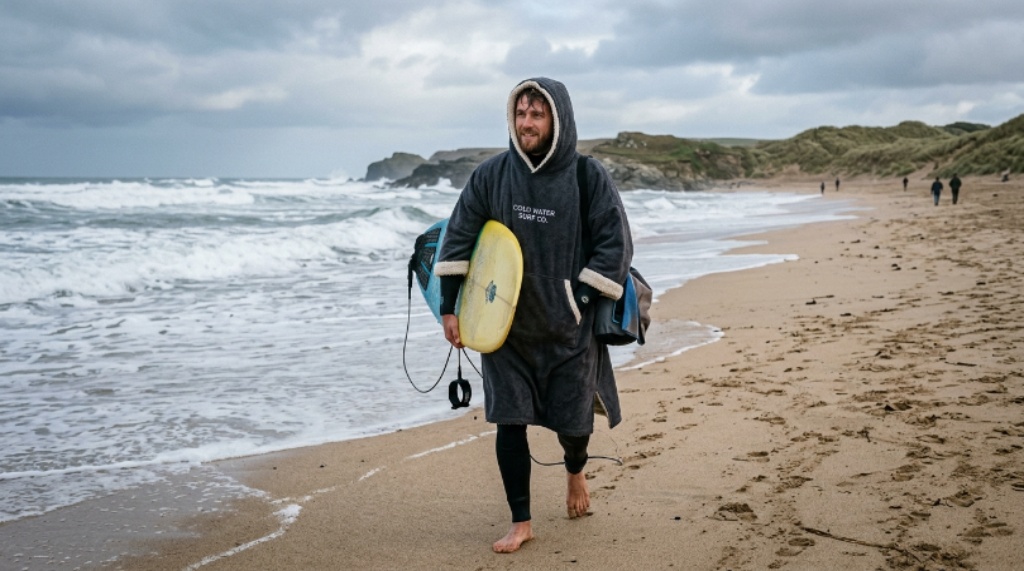
Changing out of a wetsuit in a cold car park is one of surfing’s least glamorous moments. A good surf poncho fixes that instantly. It gives you warmth, privacy, and comfort right after you step out of the water. However, with so many options on the market in 2026, choosing the right one can feel overwhelming. This guide breaks it all down so you can find the perfect poncho for your needs.
What Is a Surf Poncho and Why Do You Need One?
A surf poncho is a changing robe designed specifically for water sports. It looks like an oversized hooded towel, but it does much more than dry you off. A good poncho keeps you warm after a cold surf session, lets you change clothes in public without exposing yourself, and protects you from wind while your body temperature recovers.
Surfers, swimmers, triathletes, and open-water swimmers all use them. Therefore, the market has grown quickly, and designs have become much more sophisticated over the years. Whether you surf in tropical waters or brave the Atlantic in winter, there is a poncho built for your conditions.
Key Factors to Consider Before Buying
Not all surf ponchos are the same. Before you spend your money, it helps to understand what separates a great poncho from a poor one.
Material and Warmth
The material is the most important factor. Most ponchos fall into two categories: towelling and fleece.
Towelling ponchos are made from cotton or microfibre. They absorb water well and dry you off quickly. They are lighter and easier to pack. However, they do not provide as much insulation as fleece options.
Fleece-lined ponchos are thicker and much warmer. They are ideal for cold-water surfers or anyone who surfs in autumn and winter. The outer shell is usually water-resistant, while the soft fleece interior traps body heat. Additionally, they tend to be more durable over time.
Microfibre is a popular middle ground. It dries fast, feels soft against the skin, and is lighter than both standard cotton and fleece. Many of the top surf robes on the market today use high-grade microfibre for exactly these reasons.
Size and Fit
Ponchos come in a range of sizes. Getting the right fit is important. Too small and it becomes difficult to change underneath. Too large and it becomes bulky and impractical to carry around.
Most adults do well with a standard size that falls to mid-thigh or knee length. If you are tall or broad-shouldered, look for an XL or a brand that offers extended sizing. Some brands also offer separate kids’ sizes, which are shorter and narrower to avoid tripping hazards.
Hood Design
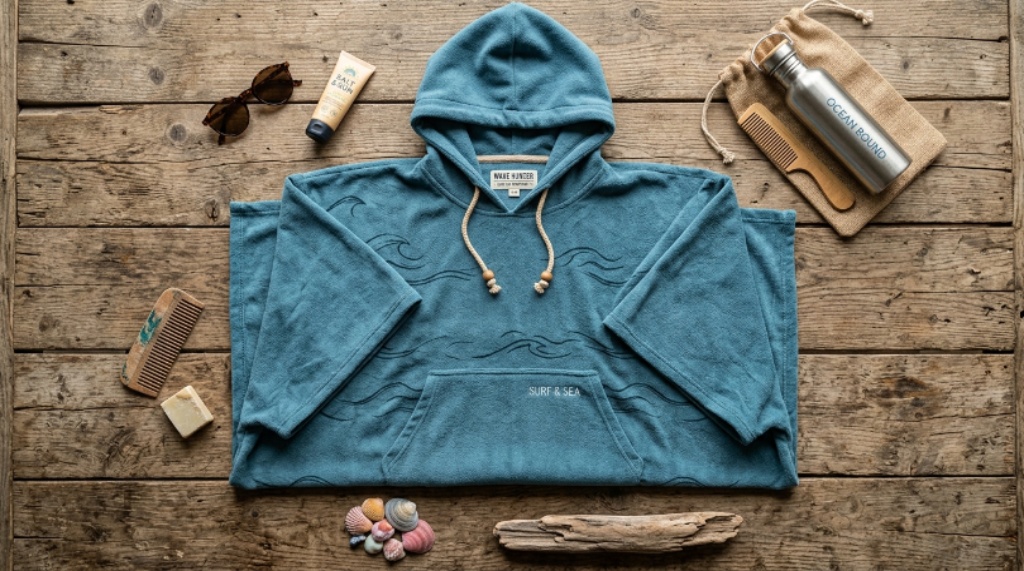
The hood matters more than most people realise. A well-designed hood keeps wind off your face and helps your head dry faster. Look for a deep hood with a drawstring. Flat or shallow hoods let the wind in and do not offer much warmth.
Some ponchos also include a kangaroo-style front pocket. This is great for warming your hands or storing your keys and phone while you change.
Zips and Closures
Traditional ponchos have no zip. You pull them over your head like a poncho-style top. This is fine for most situations. However, some newer designs include a front zip or button closure. These make it easier to put on and take off, especially when your hands are cold and stiff after a long session.
Poncho Trends to Watch in 2026
The surf poncho has evolved significantly in recent years. Poncho trends in 2026 reflect a growing focus on sustainability, performance, and everyday versatility.
One of the biggest shifts is toward recycled materials. Many leading brands now use fabrics made from recycled plastic bottles or reclaimed ocean waste. These eco-friendly materials perform just as well as traditional options and reduce environmental impact. For surfers who care about the oceans they surf in, this is a meaningful development.
Another trend is the crossover design. Ponchos are no longer just for the beach. Brands are styling them to look good in town, at festivals, and on hiking trails. Cleaner cuts, neutral colour palettes, and slimmer profiles mean you can wear one without looking like you just stepped off a surfboard.
Additionally, technical features are becoming more common even in entry-level models. Waterproof outer shells, taped seams, and anti-odour treatments are showing up across a broader price range. You no longer have to spend a fortune to get a well-engineered poncho.
How to Choose the Right Poncho for Your Climate
Where you surf has a big impact on what type of poncho you need.
If you surf in warm or tropical conditions, a lightweight microfibre poncho is usually enough. It will dry you off quickly and protect you from the sun and breeze after your session. You do not need heavy insulation when the air temperature is warm.
If you surf in cold-water locations — think the UK, Ireland, New Zealand’s south coast, or Canada — you need something with real warmth. A fleece-lined poncho with a water-resistant outer layer is the right choice. These ponchos act almost like a changing robe and jacket combined. They are heavier and less packable, but the warmth they provide is worth it.
For surfers who travel between climates, a mid-weight poncho with a removable or packable design offers the best flexibility. Some of the latest surf gear includes modular ponchos where the inner lining detaches, giving you two products in one.
Budget Guide: What to Expect at Every Price Point
Surf ponchos are available at a wide range of prices. Here is what you can generally expect.
Under $40: You will find basic cotton or low-grade microfibre ponchos. They get the job done for casual beachgoers but tend to wear out faster and offer less insulation. Hood designs are often simple and the stitching may not hold up to heavy use.
$40 to $80: This is the sweet spot for most surfers. At this price, you get better materials, stronger stitching, improved hood design, and more thoughtful features like front pockets and drawstrings. Many reliable and well-reviewed ponchos live in this range.
$80 to $150 and above: At this level, you are looking at premium fleece-lined robes, sustainable materials, technical outer shells, and refined designs. These ponchos last for many years and perform excellently in harsh conditions. They are worth the investment if you surf regularly or in cold climates.
Top Features to Look For in a Surf Poncho
When you are comparing options, keep this checklist in mind:
- Deep, adjustable hood with a drawstring for wind protection
- Microfibre or fleece interior for warmth and quick drying
- Water-resistant or quick-dry outer shell
- Kangaroo pocket or side pockets for storage
- Knee or mid-thigh length for comfortable changing
- Durable stitching at stress points like the hem and cuffs
- Sustainable or recycled materials if eco-impact matters to you
These features apply across all price ranges. Even budget ponchos should meet most of these criteria to be worth buying.
How to Care for Your Surf Poncho
A surf poncho is an investment. Proper care will extend its life significantly.
Always rinse your poncho in fresh water after use in the sea. Salt and sand break down fibres over time. Wash it on a gentle cycle using cold water and a mild detergent. Avoid fabric softeners, as they can reduce the absorbency of microfibre and towelling materials.
Air-dry your poncho rather than putting it in the tumble dryer. High heat damages microfibre and can shrink cotton. Hang it in a well-ventilated area and allow it to dry fully before storing it. If stored damp, it can develop a musty smell that is difficult to remove.
Conclusion
A great surf poncho is one of the most practical purchases a surfer or water sports enthusiast can make. It solves a real problem — staying warm and changing with privacy after a session — and it does so without complicating your routine.
In 2026, the options are better than ever. Poncho trends point toward smarter materials, sustainable production, and more versatile designs. Whether you are looking for something lightweight for summer use or a heavy-duty fleece robe for cold-water surfing, there is a poncho built for you.
Start by knowing your climate, your budget, and how often you surf. From there, focus on material quality, hood design, and length. Additionally, consider brands that use recycled materials if sustainability matters to your purchasing decisions. The top surf robes on the market today offer real performance at a range of price points, so there is no reason to settle for something that does not suit your needs.
The right poncho will keep you warm, simplify your post-surf routine, and last for years with proper care. It is one of those small upgrades that makes every session more enjoyable from start to finish.
Frequently Asked Questions
What is the difference between a surf poncho and a changing robe?
The terms are often used interchangeably. However, changing robes tend to be longer, thicker, and more insulated — designed for cold conditions. Surf ponchos are typically lighter and shorter, suited to a wider range of temperatures. Both serve the same basic purpose of warmth and changing privacy.
Can I use a surf poncho for other activities besides surfing?
Absolutely. Swimmers, triathletes, kayakers, and hikers all use surf ponchos. They are also popular at festivals and outdoor events where changing facilities are limited. The crossover appeal is one reason the market has grown so quickly.
How do I know what size poncho to buy?
Most adult ponchos fit a wide range of body types. However, if you are tall or broad, look for XL or extended sizes. Check that the length reaches at least mid-thigh so you can change comfortably underneath. Kids’ sizes are designed to be shorter and more fitted to prevent tripping.
Are expensive ponchos really worth the price?
For casual or occasional use, a mid-range poncho works perfectly well. However, if you surf regularly — especially in cold water — a premium poncho pays for itself over time through better warmth, superior materials, and longer durability. Think of it as a cost-per-use calculation rather than an upfront price comparison.
How should I store my surf poncho between sessions?
Always make sure it is fully dry before storing. Fold or roll it loosely and keep it in a dry, ventilated space. Avoid storing it in a sealed bag when damp, as this leads to mildew. Many ponchos come with a carry bag — these are great for transport but not for long-term storage unless the poncho is completely dry.
Related Topics:
Is Specialised a Good Bike? Powering Your Cycling Experience
In-Depth Bavilk Helmet Review: Safe and Comfortable for All Ages
About Author
