
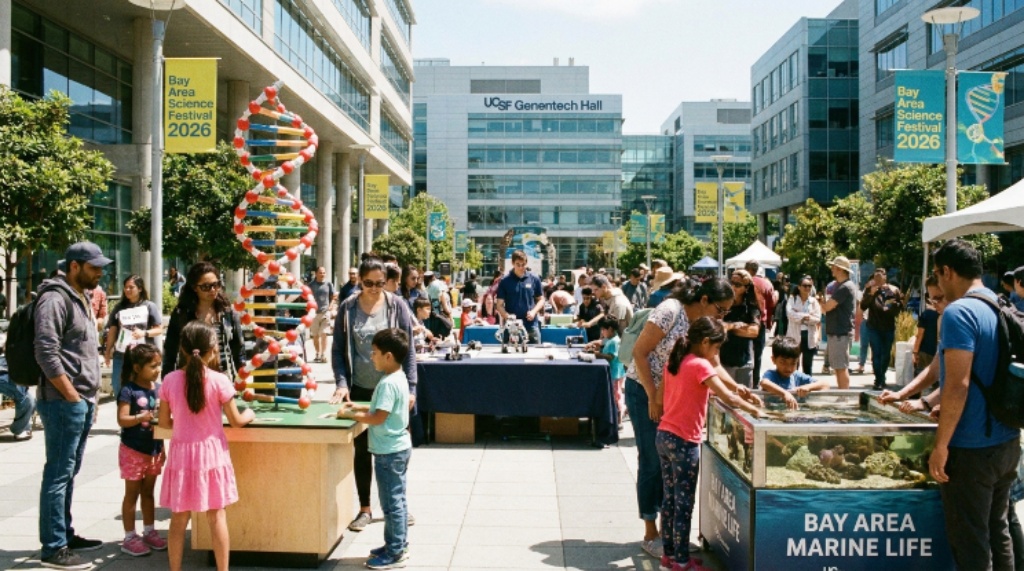
Science has always been one of the most exciting ways to explore the world around us. On October 17, 2026, San Francisco will once again become the center of that excitement. The Bay Area Science Festival 2026 is returning for its 13th edition, and it promises to be the most thrilling celebration of science the region has ever seen.
Held at UCSF’s Mission Bay Campus, Koret Quad, the festival runs from 11 AM to 4 PM. Best of all, it is completely free to attend. Whether you are a parent looking for a fun day out, a student passionate about discovery, or simply someone who loves learning, this event has something special for you.
What Is the Bay Area Science Festival?
The Bay Area Science Festival is Northern California’s largest free science celebration. The Science & Health Education Partnership (SEP) at the University of California, San Francisco organizes it. UCSF works hand in hand with Bay Area universities, museums, cultural institutions, research labs, libraries, after-school groups, corporations, and government agencies to make the event possible.
The festival first launched more than a decade ago with a simple mission: bring science to life for everyone. Over the years, it has grown into a community-wide celebration that draws thousands of visitors each year. Additionally, it serves as a powerful reminder that science is not just for experts. It belongs to all of us.
Date, Time, and Location at a Glance
Before diving into the highlights, here is a quick overview of the essential details:
| Detail | Information |
| Date | Saturday, October 17, 2026 |
| Time | 11:00 AM – 4:00 PM |
| Venue | UCSF Mission Bay Campus, Koret Quad |
| Admission | Free |
| Organizer | UCSF Science & Health Education Partnership (SEP) |
| Edition | 13th Annual |
| Activities | 125+ hands-on experiences |
The Mission Bay Campus is a vibrant, modern neighborhood in San Francisco. It is easy to reach by public transit, and the open quad provides plenty of space for families to explore freely throughout the day.
Over 125 Hands-On Experiences Await
One of the most exciting parts of this festival is the sheer variety of activities on offer. Visitors can expect more than 125 hands-on experiences spread across the grounds. These are not passive displays. They are interactive stations where you can touch, try, and discover for yourself.
From biology to robotics, chemistry to environmental science, every corner of the festival offers something new. You can conduct simple experiments, test your problem-solving skills, and get up close with technology that might feel futuristic at first glance. However, by the end of the day, it will all feel completely real and reachable.
Live Science Demonstrations
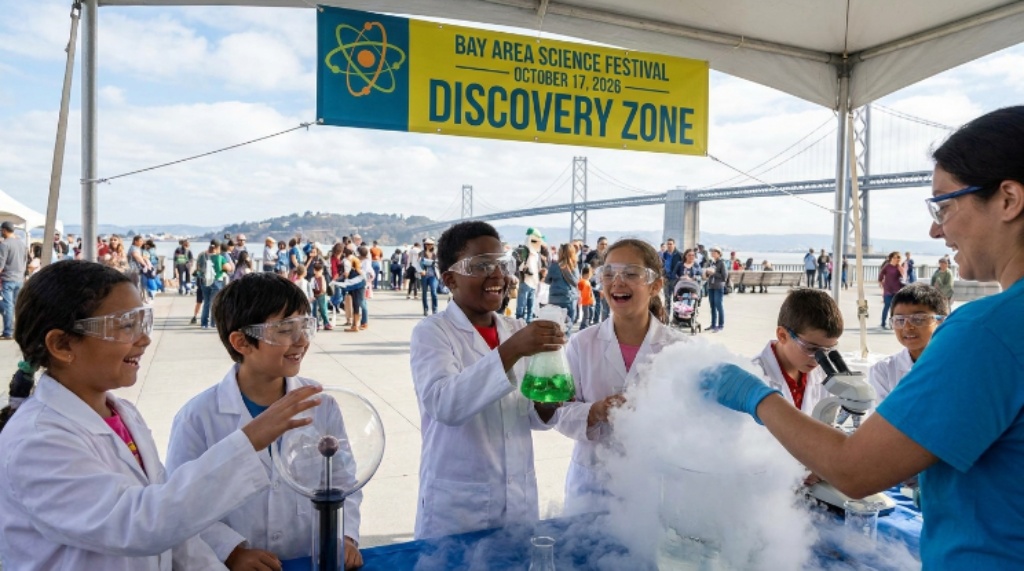
Live demonstrations are always a crowd favourite at the festival. Scientists and science educators take to open spaces and stages to show off some of the most jaw-dropping experiments you will ever see. These demos are designed to surprise and delight people of all ages.
You might watch a chemical reaction produce a burst of colour, or see a physics experiment that seems to defy common sense. Each demonstration comes with a clear explanation, so you understand not just what is happening, but why. Therefore, you leave not just amazed, but genuinely informed.
Behind-the-Scenes Lab Tours
For those who want to go deeper, behind-the-scenes lab tours offer a rare opportunity. UCSF is one of the world’s leading research universities, and the festival opens some of its labs to the public for this special occasion.
You can see real laboratory equipment, meet working scientists, and learn about the kinds of research happening right now at UCSF. These tours are typically led by scientists themselves, which makes the experience even more meaningful. It is one thing to read about how science works in a textbook. It is quite another to see it unfolding in a real lab.
Science Talks and Presentations
The festival also features a line-up of science talks. These sessions bring together researchers, educators, and STEM professionals to share their knowledge in an accessible way. Topics span a wide range, from health and medicine to space and climate science.
The talks are designed to be engaging, not lectures. Speakers know how to connect with general audiences and make complex ideas easy to grasp. Additionally, many speakers are passionate about mentorship and will take time after their presentations to chat with aspiring scientists, especially young attendees.
Exhibits from Universities, Museums, and Research Labs
The exhibit area is the beating heart of the festival. Dozens of organisations set up interactive booths where you can engage directly with their work. Bay Area universities bring their latest research. Museums bring their most engaging educational tools. Research labs share discoveries that are pushing the boundaries of what we know.
Here is a sample of what you might encounter across the exhibit floor:
| Exhibit Theme | What to Expect |
| Biomedical Science | DNA models, microscopes, and health innovations |
| Environmental Science | Climate data, wildlife conservation, and sustainability |
| Space and Astronomy | Planet models, telescope views, and space exploration |
| Robotics and Engineering | Build challenges, robot demos, and coding activities |
| Mathematics and Logic | Puzzles, pattern games, and visual math concepts |
| Physics and Chemistry | Experiments with light, sound, and materials |
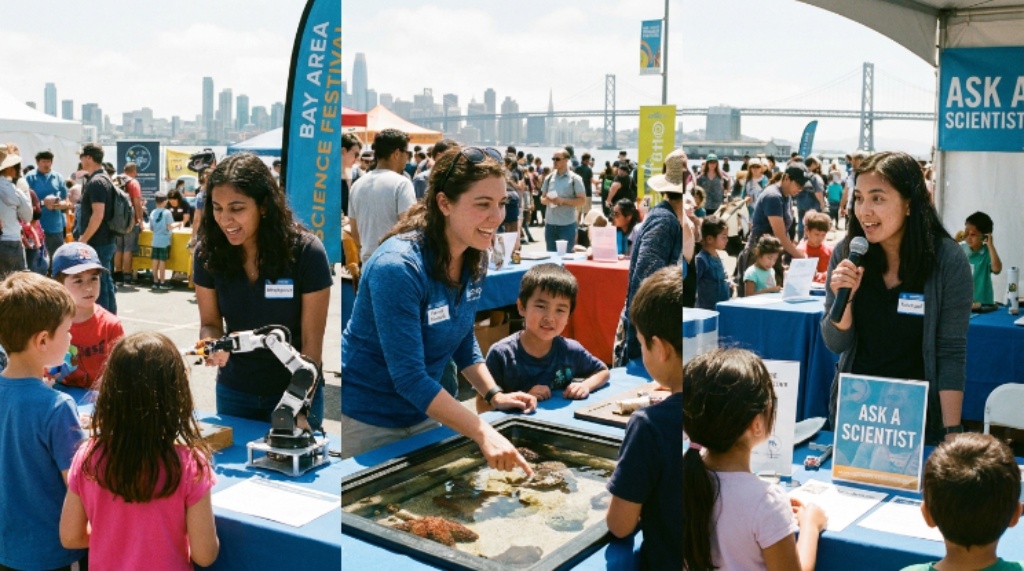
Each booth is staffed by enthusiastic volunteers and professionals who love talking about what they do. Therefore, do not be shy about asking questions. That curiosity is exactly what the festival aims to encourage.
Family Activities and Kids’ Zones
The festival has always been deeply family-friendly, and 2026 is no exception. Children are at the heart of everything. There are activities designed for toddlers, primary school children, and teenagers alike. No matter the age, there is something engaging waiting.
Young children can enjoy simple sensory science activities and colourful experiments. Older kids can dive into more challenging engineering tasks and science games. Teenagers, meanwhile, will find plenty of inspiration from STEM professionals who share how they got started in their careers. These personal stories are often the most memorable parts of the day for young visitors.
STEM Role Models and Career Inspiration
One of the most valuable aspects of the festival is its focus on STEM role models. Across the grounds, you will meet scientists, engineers, doctors, researchers, and technologists from a wide range of backgrounds. Many of them are there specifically to inspire the next generation.
Seeing a scientist who looks like you, grew up in a similar neighbourhood, or faced similar challenges can be transformative for a young person. The festival understands this deeply. However, it also knows that role models matter for adults too. Seeing what people achieve in STEM fields can reignite a passion for learning at any stage of life.
Film Screenings
Alongside the live activities, the festival will feature science film screenings. These short films cover a broad range of topics in engaging, visual formats. They are a great way to wind down between hands-on activities while still absorbing new ideas.
The screenings cover topics that tie into the day’s broader themes. Some highlight scientific discoveries. Others focus on the human stories behind breakthrough research. Together, they add a thoughtful, reflective dimension to what is otherwise a very active and energetic day.
Accessibility and Inclusivity
UCSF is committed to making the festival welcoming for all visitors. The event is designed with accessibility in mind. If you or someone in your group needs a reasonable accommodation because of a disability, you are encouraged to reach out to the festival team in advance at info@bayareasciencefestival.org.
The organisers take inclusivity seriously. This festival is for everyone, and the team works hard to ensure no one feels left out. Families of all backgrounds, languages, and abilities are warmly welcomed.
How to Get to UCSF Mission Bay Campus
Getting to the festival is straightforward. UCSF’s Mission Bay Campus is well-served by San Francisco’s public transit network. The T Third Street Muni Metro line runs directly through the area. Several bus routes also connect Mission Bay to other parts of the city.
If you are driving, paid parking is available in the area. However, public transit is strongly recommended, especially for a busy event day. Arriving early is always a good idea. The festival opens at 11 AM and gets increasingly busy as the morning progresses.
Plan Your Visit: Tips for a Great Day
To make the most of your time at the festival, a little planning goes a long way. Here are some practical tips:
- Arrive early to beat the crowds and get first pick of activities.
- Wear comfortable shoes, as you will be on your feet for most of the day.
- Bring water and snacks, though food vendors may be available on site.
- Check the official Bay Area Science Festival website closer to the date for the full schedule of talks and demonstrations.
- Bring a small notebook or use your phone to jot down ideas, websites, or names that interest you during the day.
- Engage with exhibitors. Ask questions. They love talking about their work.
Why This Festival Matters
Science shapes nearly every aspect of modern life. Medicine, technology, climate, food, transport — all of it depends on the work of scientists and researchers. Yet many people feel that science is distant, complicated, or not for them.
The Bay Area Science Festival directly challenges that feeling. It brings science out of the lab and into the open air, making it visible, tangible, and fun. Additionally, it shows that STEM is not a closed club. It is a community of curious people, and anyone can be part of it.
For children especially, days like this can plant seeds that grow into careers, passions, and lifelong habits of learning. That is a remarkable thing to be part of, even as a visitor.
Conclusion
The Bay Area Science Festival on October 17, 2026 is more than just a free day out. It is a celebration of curiosity, a showcase of innovation, and an invitation to every person in the Bay Area to explore the world of science. With over 125 hands-on experiences, live demonstrations, lab tours, science talks, film screenings, and exhibits from leading universities and research institutions, visitors can enjoy a day packed with discovery from start to finish.
The festival is free, family-friendly, and designed for people of all ages and backgrounds. It takes place from 11 AM to 4 PM at UCSF’s Mission Bay Campus, Koret Quad in San Francisco. Whether you are bringing toddlers, teenagers, or yourself, you will leave the day feeling inspired, informed, and excited about what science can do.
Mark your calendar now. October 17, 2026 is a day you will not want to miss.
Frequently Asked Questions
When and where is the Bay Area Science Festival 2026?
The festival takes place on Saturday, October 17, 2026, from 11 AM to 4 PM at UCSF Mission Bay Campus, Koret Quad in San Francisco, California.
Is the Bay Area Science Festival free to attend?
Yes, the festival is completely free for all attendees. The organisers work hard each year to raise the funds needed to keep the event accessible to everyone in the community.
Is the festival suitable for young children?
Absolutely. The festival welcomes all ages, including young children. There are hands-on activities, science games, and exhibits tailored specifically for younger visitors, alongside content that appeals to teenagers and adults.
How do I get to UCSF Mission Bay Campus by public transit?
The T Third Street Muni Metro line is the most convenient option. Several bus routes also serve the Mission Bay area. Visitors are encouraged to use public transit on the day of the festival, as parking can be limited.
How can I get involved as a volunteer or exhibitor at the festival?
Visit the official Bay Area Science Festival website at bayareasciencefestival.org and navigate to the “Get Involved” section. Options include volunteering, exhibiting, presenting on stage, or sponsoring the event.
Get Directions Using Google Maps:
About Author

You may also like
-
State Fair of Virginia 2026: Tickets, Rides and Attractions
-
Arizona State Fair 2026: Dates, Tickets, Concerts and Everything to Know
-
How to Find Safe Arborist Rope Kits Under Budget
-
How to Pick Windproof Surf Ponchos for Cold Water Surfing
-
Iowa State Fair 2026: Dates, Concert Schedule, Ticket Guide and Fair Highlights